
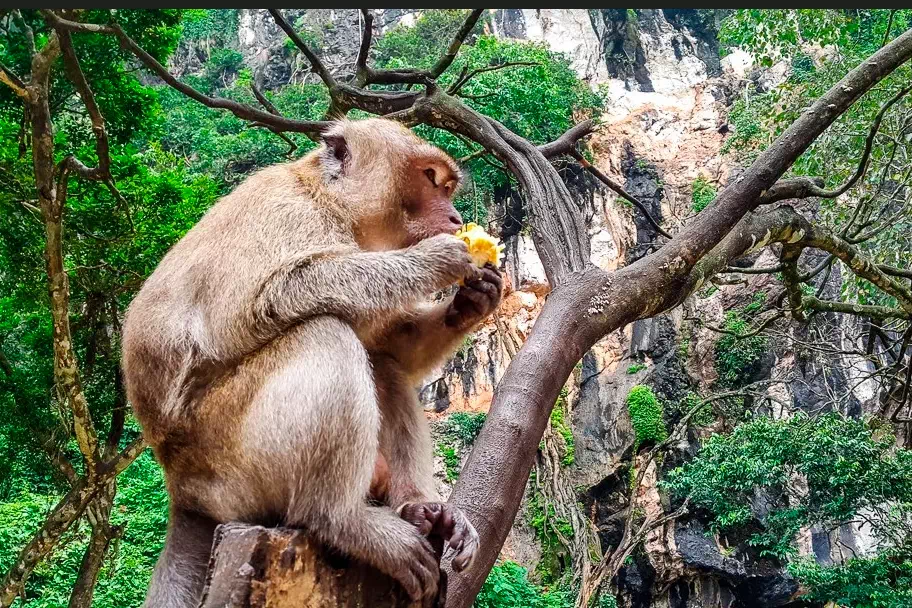
Crab-eating Macaque – The Clever Monkeys of the Bay
Crab-eating macaques (Macaca fascicularis), also known as long‑tailed macaques, are the most common wild mammals you will see around James Bond Island. They live in large troops on the limestone cliffs and in the mangroves. They are intelligent, curious, and often bold with tourists. This page explains their behaviour, diet, and how to stay safe around them.
🐒 Watch monkeys safely on a tour 🐒
Our guides know where monkeys gather and will keep you at a safe distance. Tours start around 1,500 THB.
Where to See Them
Crab-eating macaques are widespread in Phang Nga Bay. You will see them on Koh Panyee (around the village), on Panak Island (climbing the cliffs), and on the mainland near piers. They are most active in the early morning (7‑9 AM) and late afternoon (4‑6 PM). Midday heat makes them rest in the shade. Do not approach them – they are wild.
Diet and Behaviour
Despite the name, they do not eat only crabs. Their diet includes fruits, leaves, insects, small crabs, shellfish, and even stolen food from tourists. They have cheek pouches to store food while foraging. Troops are led by a dominant female (matriarch), with several males. They communicate with barks, grunts, and facial expressions. A smile showing teeth is a threat – not a friendly greeting.
Dangers and Safety Rules
Monkeys can be aggressive if fed. Do not feed them – it makes them dependent and bold. Fines for feeding can be 500‑1,000 THB. If a monkey approaches you, do not run or scream. Stand still, avoid eye contact, and back away slowly. Keep plastic bags, food, and shiny objects hidden – monkeys will snatch them. If bitten, wash the wound with soap and water immediately, then seek medical help (rabies risk).
Conservation Status
Crab-eating macaques are listed as “Least Concern” by the IUCN. In some areas, they are considered pests, but in the national park they are protected. Tourists feeding them causes population imbalances and increases conflict. Follow the rules to keep them wild and healthy.
Final Word
Watching monkeys from a boat is fun. Seeing them snatch a tourist’s bag is not. Be smart, keep distance, and enjoy their natural antics without interfering.
— Written by the team at VisitJamesBondIsland.com