
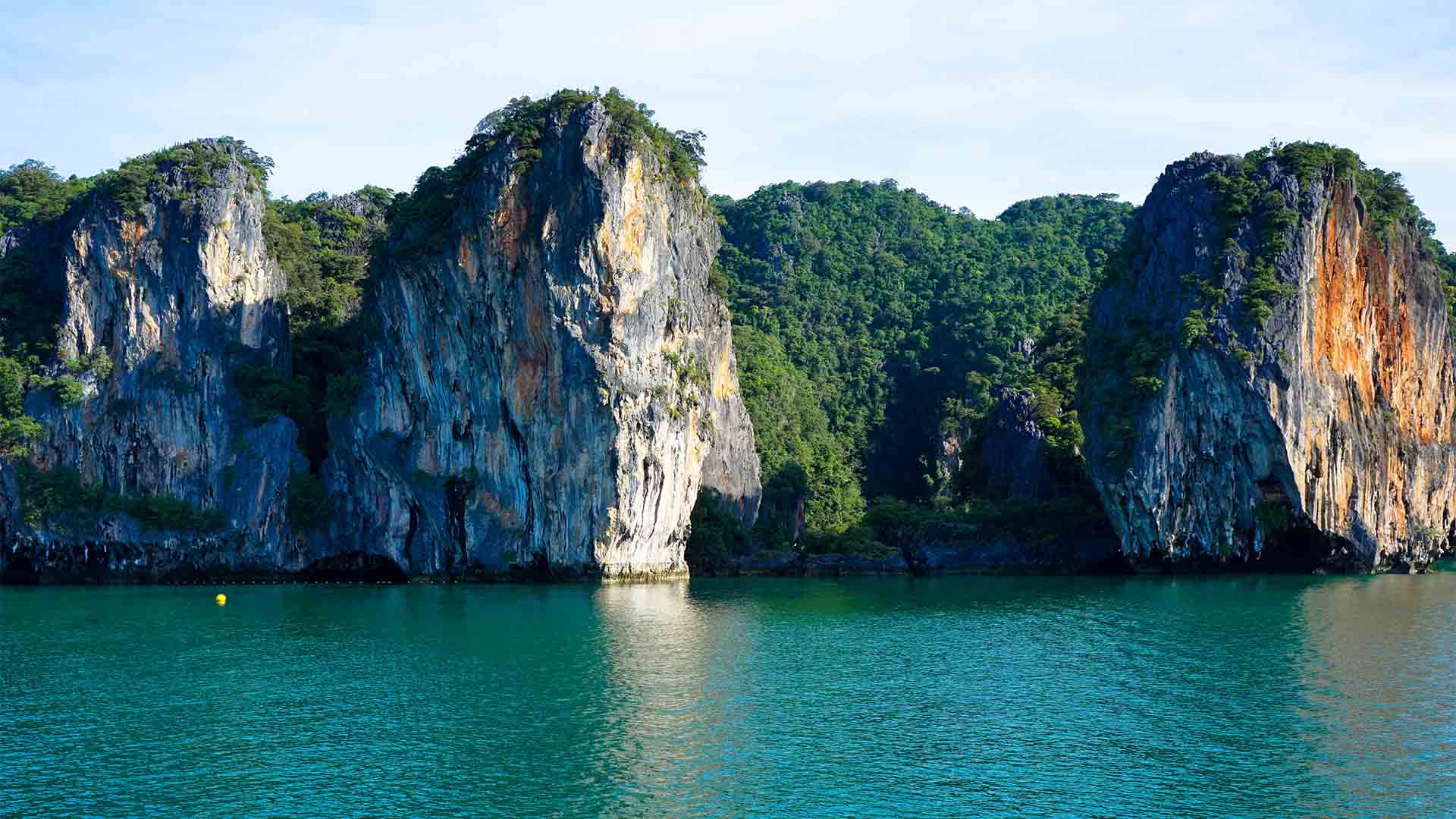
Limestone Karst Formation – The Geology of James Bond Island
Limestone karst is the name for the dramatic, sharp‑edged rock towers that rise out of Phang Nga Bay. These formations make James Bond Island famous. They are not just beautiful – they tell a story of ancient seas, millions of years of erosion, and the power of water. This page explains how these towers were built, why they look so strange, and how you can see them up close. No difficult science – just simple facts for curious travellers.
🏞️ See limestone karsts in person 🏞️
Join a small‑group boat tour into the heart of Phang Nga Bay. Observe the geology from the best viewpoints. Tours start around 1,500 THB per person.
🚤 Book a Geology Tour →✓ Local guides ✓ Hotel pickup ✓ Best viewpoints
What Is Limestone Karst?
Limestone karst is a landscape shaped by the dissolving action of water on soft limestone rock. Over millions of years, rainwater (which is slightly acidic) eats away the rock, leaving behind steep cliffs, sharp peaks, caves, and underground rivers. The word “karst” comes from a region in Europe, but the best examples in the world are here in Southeast Asia – especially in Phang Nga Bay, Halong Bay in Vietnam, and Guilin in China.
What makes karst special is its vertical walls. Unlike normal hills, which slope gently, karst towers rise almost straight up from the water. Some are so steep that no tree can grow on them – only small bushes and birds. The rock is usually grey or white, often with black stripes from algae and minerals.
How Did the Karsts of Phang Nga Bay Form?
The story begins about 295 to 250 million years ago, during the Permian Period. At that time, the area that is now southern Thailand was covered by a shallow, warm sea. This sea was full of tiny marine creatures – corals, shells, and plankton. When these creatures died, their calcium carbonate skeletons fell to the seabed. Over millions of years, these layers of shell fragments built up, sometimes thousands of metres thick. The weight of the upper layers squeezed the lower layers into solid limestone rock.
Then, about 50 million years ago, the Indian tectonic plate crashed into the Eurasian plate. This collision pushed up the Himalayan mountains and also lifted the seabed of Southeast Asia. The limestone that had been under the sea was now above the water. Rain began to fall on it. Rainwater contains a small amount of carbonic acid (from carbon dioxide in the air). This acid slowly dissolves limestone – like sugar dissolving in coffee, but much slower.
Over tens of millions of years, the acid rain carved cracks and holes into the flat limestone plateau. The cracks widened into deep gullies, leaving behind isolated blocks. Then the sea level rose again after the last Ice Age (about 10,000 years ago), flooding the lowlands. The tall blocks that remained above water became the islands (karst towers) we see today. The process continues – each rain shower eats away a tiny bit more rock. For a detailed explanation of a single sea stack, read our guide to sea stacks like Ko Tapu.
Why Do Some Karsts Have Holes and Caves?
As water runs down the sides of the towers, it follows natural cracks. Over thousands of years, it can cut a notch at the base of the cliff – this is called “undercutting”. Waves also splash against the base, speeding up the erosion. Some of these notches become deep enough to form caves. The best‑known cave in Phang Nga Bay is Panak Island’s “Ice Cream Cave”, where stalactites drip down. Other caves, such as those at Hong Island, are actually collapsed ceilings – they look like round swimming pools enclosed by cliffs.
You can’t climb into most of these caves yourself. But during a boat tour, you can kayak into the larger caves at low tide. The entrance is often just one metre above water, so you must lie flat in the kayak. It feels like entering a secret world. Local guides know exactly which caves are safe and when to enter.
The Karst Towers of James Bond Island
The two most famous karst towers in Phang Nga Bay are Khao Phing Kan (the twin‑hill island) and Ko Tapu (the nail rock). Khao Phing Kan is a double tower – two hills leaning together. Ko Tapu is a sea stack that broke away from Khao Phing Kan thousands of years ago. Together, they form the iconic James Bond Island view. Other notable karsts in the same bay include Koh Panyee (a large island with a village built on stilts around its base), Panak Island (famous for its large cave), and Hong Island (a ring of cliffs enclosing a hidden lagoon).
Geologists measure the height of these towers from the seabed. Many rise 80 to 100 metres above the sea floor, though only 20‑40 metres are visible above water. The rock itself is very old, but the towers are young – they began to take their current shape only about 2 million years ago. In geological time, that is like yesterday.
Where Else Can You See Limestone Karst?
If you enjoy the scenery of Phang Nga Bay, you may also like: Halong Bay in Vietnam (UNESCO World Heritage site, similar but much larger); Railay Beach in Krabi (karst towers right on the sand, good for rock climbing); Cheow Lan Lake inside Khao Sok National Park (freshwater karsts rising from a reservoir); and Vang Vieng in Laos (river karsts with caves). Each place has the same basic geology but different colours and shapes. For a full list, see our nearby attractions page.
How to Observe Karst Geology on a Tour
You don’t need to be a scientist to appreciate karst. Most tours from Phuket or Krabi include a stop at the best viewpoints. Here is what to look for:
- Vertical cracks – these are joints where water first entered the rock.
- Notches at the waterline – undercutting from waves.
- Small caves – usually at the base of larger towers.
- Sharp, jagged tops – unlike the rounded hills you see inland.
- White or grey colour – limestone is naturally pale; only algae make it look dark.
A good guide will point these out and explain how they formed. Some tours offer kayaking inside sea caves – this is the best way to see the undercutting. Tour prices vary, but a standard day trip from Phuket costs around 1,500‑2,500 THB, including lunch and hotel pickup. See our practical information page for tips on choosing a tour.
Wildlife That Lives in Karst Limestone
The cracks and caves of karst towers are home to unique animals. Look for crab‑eating macaques – they climb the vertical walls easily, using small ledges. At dusk, you may see bats streaming out of cave openings – mostly wrinkle‑lipped bats, which eat insects. On the rock faces, look for small lizards called rock geckos (they are brown with big eyes). In the water around the bases, fish like the blue crab and barramundi use the limestone nooks as shelter. The rocks also host rare plants that can only grow on limestone, such as the “karst violet” and certain ferns. However, these plants are fragile – never pick them or step on them.
Best Time to Photograph Karst Towers
For the best photos, visit between November and February. The sky is often clear, and the morning light (7‑9 AM) makes the grey limestone look golden. Evening light (4‑6 PM) adds long shadows that emphasise the vertical cracks. Avoid midday (11 AM‑2 PM) – the sun is directly overhead, making the rocks flat and removing all shadows. If you visit during the rainy season (June‑October), the clouds add drama, but tours may be cancelled due to wind and waves. Check our best time to visit guide.
Conservation of Karst Landscapes
Limestone karst is fragile and non‑renewable on a human timescale. Once a tower collapses or is damaged, it will not regrow. The national park has strict rules: do not touch the rock face (oils from your hands damage the surface), do not remove any pieces, do not climb the towers, and do not use flash photography in caves (it disturbs bats). Also, never write or scratch anything onto the rock – fines start at 5,000 THB. Thai people say “rak thammachat” (รักธรรมชาติ) – “love nature”. Good visitors leave the karst exactly as they found it.
Frequently Asked Questions About Limestone Karst
Q: How old are the karst towers in Phang Nga Bay?
A: The limestone rock is about 250‑295 million years old. The towers themselves began to take shape about 2 million years ago.
Q: Can I climb a karst tower?
A: No. Climbing is forbidden in the national park because the rock is soft and unstable. Specialised climbing is only allowed at designated areas like Railay Beach in Krabi.
Q: Why is the rock sometimes black?
A: The black colour comes from algae and cyanobacteria that grow on the wet limestone. It is not pollution – it is natural.
Q: Will the towers eventually collapse?
A: Yes, all karst towers will eventually erode away. But that will take tens of thousands of years. For now, they are safe to view.
Q: Can I take a small piece of rock home?
A: Absolutely not. Removing any natural material from the national park is illegal and carries heavy fines.
Q: Are there any living things inside the rock?
A: Yes, small snails, insects, and even tiny crabs live inside the tiny cracks. They are specially adapted to the dark and damp environment.
Final Word From Local Experts
Limestone karst is the silent star of Phang Nga Bay. The James Bond film made the place famous, but the rock itself has been standing for millions of years. When you look at a karst tower, you are looking at ancient sea floors, the movement of continents, and the slow work of rain. It is a lesson in patience. The best way to appreciate it is to sit quietly on a boat, listen to the water, and watch how the light changes on the rock.
Visit with curiosity. Ask your guide questions. Take only photographs. And remember the Thai saying: “Nam khao, sa khao” – white water, white sand. That clear water and bright sand exist because of the limestone. Respect it, and you will enjoy it for years to come.
— Written by the team at VisitJamesBondIsland.com