
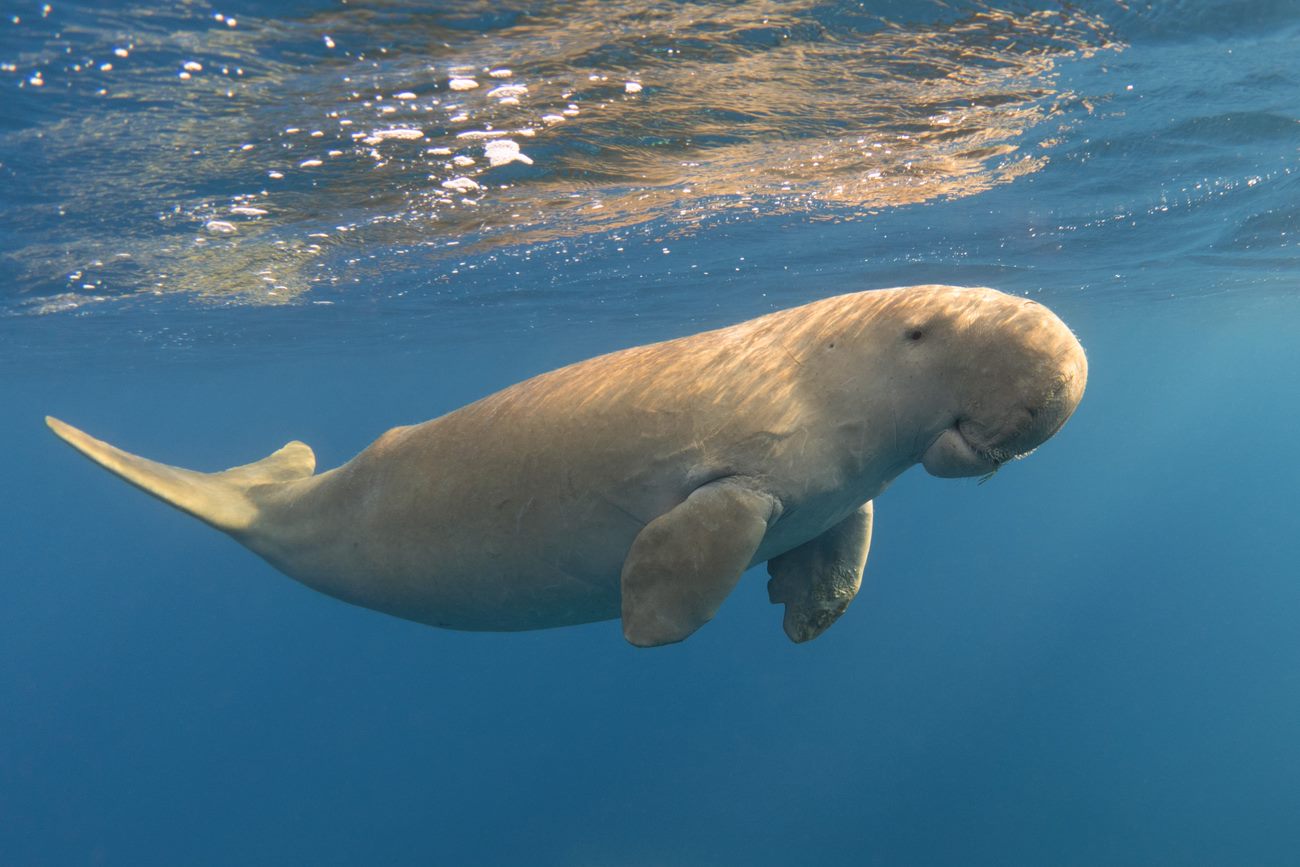
Dugong – The Sea Cow of Phang Nga Bay
Dugongs (Dugong dugon) are large marine mammals that live in the shallow coastal waters of the Indian and Pacific Oceans. They are often called “sea cows” because they graze on seagrass. Phang Nga Bay is one of the few places in Thailand where dugongs are still occasionally seen. However, they are extremely rare and shy. This page tells you about their biology, the threats they face, and – if you are very lucky – how you might spot one.
🌊 Protect the dugongs of the bay 🌊
Join a responsible tour that avoids disturbing their seagrass beds. Book with eco‑certified operators.
What Is a Dugong?
Dugongs are sirenians – the same order as manatees. They are more closely related to elephants than to whales or dolphins. Adults grow to 2‑3 metres long and weigh 250‑400 kg. They have a blunt snout, small eyes, and a tail fluke like a whale. Their skin is thick and grey, often covered in algae. They are slow swimmers (5‑10 km/h) but can stay underwater for up to 6 minutes. They feed almost exclusively on seagrass, eating up to 40 kg per day.
Dugongs in Phang Nga Bay
Historically, dugongs were common in the shallow bays of southern Thailand, including Phang Nga Bay. However, hunting, habitat loss, and boat strikes have greatly reduced their numbers. Today, only a few dozen individuals may still live in the bay. The best place to see them is near the seagrass beds off the coast of Phang Nga province, especially around the islands of Koh Yao Noi and Koh Yao Yai. But sightings are very rare – many local boat captains have not seen one for years. If you are lucky enough to spot a dugong, keep at least 50 metres distance. Do not chase, feed, or swim towards it.
Seagrass – The Dugong’s Lifeline
Dugongs depend entirely on seagrass meadows. These underwater plants grow in shallow, clear water with sandy or muddy bottoms. Seagrass beds also provide nursery grounds for fish, protect the coast from erosion, and improve water quality. The seagrass in Phang Nga Bay has been damaged by tourism boats, dredging, and pollution. The national park has marked protected seagrass zones where anchoring is prohibited. When taking a tour, choose operators who respect these zones.
Conservation Efforts
Dugongs are protected under Thai law. Killing or harming them carries heavy fines (up to 300,000 THB) and prison time. Several organisations, including the Phuket Marine Biological Center, run patrols to monitor dugong populations and rescue injured animals. You can support conservation by:
- Not buying dugong meat or products (illegal).
- Choosing eco‑friendly tour operators that avoid seagrass areas.
- Reporting any dugong sightings to the national park office (call 076 381 226).
- Using reef‑safe sunscreen that does not harm seagrass.
Where and When to Look
The best chance of seeing a dugong is during the dry season (November‑April), early morning (6‑8 AM) or late afternoon (4‑6 PM), when the sea is calm. The most reliable spots are off the beaches of Koh Yao Noi (north‑east side) and near the mouth of Phang Nga Bay. However, even then, sightings are maybe one in a hundred trips. Do not go with the sole expectation of seeing a dugong – you will likely be disappointed. Instead, enjoy the beauty of the bay and consider a sighting a magical bonus.
Similar Species – The Sympatric Finless Porpoise
What you see might be a finless porpoise (Neophocaena phocaenoides) instead of a dugong. Porpoises are smaller, darker, and have no dorsal fin. They roll when surfacing, while dugongs are smoother and sometimes show their tail fluke. If you are unsure, take a video and show it to your guide.
Frequently Asked Questions
Q: Are dugongs dangerous?
A: No. They are gentle herbivores. They have no teeth for biting. However, a frightened dugong could accidentally hit a swimmer with its tail – keep a safe distance.
Q: Can I swim with dugongs?
A: It is not illegal, but it is strongly discouraged. Swimming stresses the animal and disrupts its feeding. Observe from the boat.
Q: How many dugongs are left in Phang Nga Bay?
A: No exact number, but likely fewer than 50. Some studies suggest only 10‑20 in the whole Andaman Sea region.
Q: What should I do if I see a dugong?
A: Stop the boat immediately. Keep at least 50 metres away. Do not approach slowly. Watch for 5‑10 minutes, then leave quietly. Report the sighting to the park office.
Q: Is there any place where I am guaranteed to see a dugong?
A: No. Wild dugongs are unpredictable. There are no “dugong viewing” tours in Phang Nga Bay – any tour claiming a guarantee is lying.
Final Word From Local Experts
The dugong is a symbol of a healthy bay. Its presence means the seagrass is clean, the water is clear, and the ecosystem is balanced. When you visit Phang Nga Bay, remember that you are sharing the water with shy, ancient creatures. Do not chase them, do not litter, and support conservation. If you are lucky enough to see a dugong, consider it a blessing – a sign that the bay still has wild magic. And if you do not, know that your respectful behaviour helps ensure that future visitors might.
Remember the local phrase: “Yaa yun, phayun kheng.” Protect the seagrass, and the sea cow will survive.
— Written by the team at VisitJamesBondIsland.com